
Share Mary Jo Stansfield's obituary with others.
Invite friends and family to read the obituary and add memories.
Stay updated
We'll notify you when service details or new memories are added.
You're now following this obituary
We'll email you when there are updates.
Select your format and elements to print

IN LOVING MEMORY OF Mary Jo Stansfield
Mary Jo
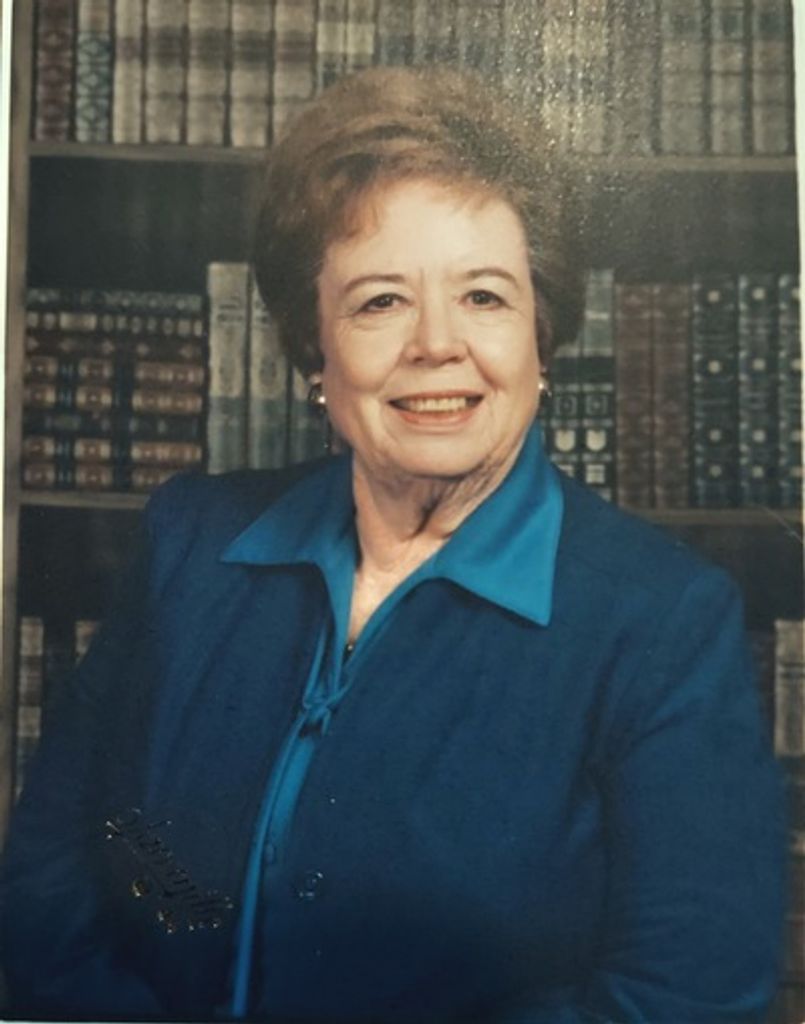
Stansfield
Nov 19, 1924 — Aug 29, 2021
Ormond Beach
Mary Jo Stansfield's Obituary
Mary Jo Stansfield
November 19, 1924 - August 29, 2021
Longtime Daytona Beach political force, healthcare advocate and community activist Mary Jo Stansfield has died
Volusia losing a generation that shaped local politics
Eulogy
At 5:20 p.m. of August 29, 2021, Mary Jo Stansfield, loving wife, mother, grandmother, great grandmother, consummate Daytona Beach business woman and civic activist for six decades, passed away at age 96 at Halifax Hospice in Edgewater FL. She had been a member of Our Lady of Lourdes Catholic Church since 1955 and a member of St. Paul's Catholic Church from 1942 to 1955. Mary Jo was born at Halifax Hospital on November 19, 1924. Her parents lived in Holly Hill and she attended Holly Hill Elementary and Mainland Junior-Senior High School.
Mary Jo is preceded in death by her mother, Esther Ella Sanders Simmons, her father, Henry Fugate Simmons, and her husband of 55 years, Charles Webb Stansfield; and her siblings, Henry F (Buddy) Simmons, Alberta Simmons and Helen Jean Settles and one child, George W. Stanfield, who died at age 4.
She is survived by three children, Charles W. Stansfield, Jr. and his wife Charlene Rivera of Rockville, MD, Richard Clyde Stansfield and his wife Shelly of Port Saint Lucie FL, and Susan Patricia and her spouse Michael Hickson of New Smyrna Beach; her 6 grandchildren, Charles David Stansfield (and spouse Nikki) of Ft. Collins CO , Dr. Brian K. Stansfield (and spouse Dr. Mindy Stansfield) of Augusta GA, Rachael H. Stansfield of Hendersonville NC, Jeni and Jason (Jake) Hickson (and spouse Carrie) and Amanda (Mandi) Morris (and spouse Josh) all of New Smyrna Beach, and by her 10 great grandchildren; Caitlyn Stansfield of Ft. Collins CO; Charlotte, Reese, Phillip, and Jack Stansfield; Finn, Brandt, Revere, Britton and ElliSue Hickson. All of us will miss her presence, as will her niece Carolyn Stansfield Jones of Rockledge FL, and her nephews Wesley Settles of Moorhead MN, Jerry and Tom Stansfield of Cocoa FL, Bruce Simmons of Ocala FL, and Chuck Graham of Charlotte NC.
Mary Jo was born on November 19, 1924. She was the fourth of five children. The Great Depression began when she was five years old. She was typical of what Tom Brokaw called "The Greatest Generation." Her mother was a nurse. Her father, spent two years in the Army from 1916 - 1918, but was unable to obtain work after the Great Depression broke out. He turned to drinking and gambling, and left town in the mid-1930s, not returning for some 30 years.
From early on, Mary Jo was smart, determined, and willing to work. She began working at age 12, to help her mom put food on the table. She got her driver's license and an after school job as chauffer for an elderly widow who owned a car. She drove the widow's Model A Ford. During her senior year of high school, she met Charles who was three years older than her. He had a paper route and was supervisor of "paper boys" in the Daytona Beach area for the Florida Times Union (Jacksonville) newspaper. She liked the fact that he was easy going, he had a job, and was supervising a dozen other paper boys.
After war broke out in Europe in 1939, Charles decided to become a welder, a trade that paid very well. He got a job at the Jacksonville shipyard and then in the Mobile AL shipyard, and he used his earnings to help his parents who had lost everything during the Great Depression. Mary Jo graduated from Mainland High School in May of 1942 and she and Charles continued to date whenever he came home from the shipyard. Pearl Harbor was bombed on December 7, 1941, and eight months later he decided to enlist in the Navy. So, Mary Jo and Charles were married by Monsignor William J. Mullally in St. Paul's Catholic Church on October 13, 1942. She was 17 years old and Charles left for the war in the Pacific two months later. Soon after the war began, the US Navy built a Naval Air Station in Daytona Beach. It was the predecessor of the Daytona Beach International Airport. In high school, Mary Jo had taken typing and shorthand and she wanted to be a part of the war effort, so she applied for and obtained a job as a secretary at the Naval Air Station. Her competency was soon noticed by the base commander who promoted her to be his secretary. She continued in this job until the war ended.
The war ended on September 2, 1945, and husband Charles arrived home six weeks later. He was now three years older and had lost 60 lbs. She didn't even recognize him when he knocked on her door.
He had no job yet, but he did have some poker money, which he had won on the Navy ships that brought him home from Guam and Micronesia. He could have looked for a job as a welder, but the couple wanted to work together and to open a business of their own. So early in 1946, before their first child was born, they used Charles' poker winnings to lease a "soda shop" that had gone out of business next to the Daytona Theater on Beach Street. To the right of the Daytona Theater was Walgreens; on the left was the Buccaneer, which they renamed Charlie's Soda Shop. Mary Jo and Charlie made a success of the soda shop. It overflowed with Mainland HS students during lunch time and after school was out, and in the evening it filled with adults before and after the 8:00 pm movie. Mary Jo and Charlie even installed a second counter on the back wall to accommodate more customers. Using the money they earned at the soda shop, they decided to invest in new and better equipment, barstools, air conditioning, etc. The landlord told them to go ahead. Then, when their lease was about to expire, the landlord raised the rent considerably and then leased it to another investor.
Next, they leased a defunct restaurant called Jaxon's Drive-In, on the beach side, near the boardwalk and the Daytona Plaza Hotel. They reopened Jaxon's Drive-In, and put a sign saying "Under New Management" in the window. They focused on fried chicken, fried shrimp, hamburgers, root beer floats, french fries, etc. The new Jaxon's Drive-In became a success. However, when the landlord disclosed that he wanted to build an office building on the property, they decided they needed to own their business property rather than lease it from someone else.
Their first child, Charles, was born in July of 1946. Their second child, George William, was born in 1949. He died in 1953, after being run over as he crossed the street at the Silver Beach/A1A approach by a car driven by an elderly man. With poor eyesight and no glasses, the driver didn't see the red light. Although it was an accident, Mary Jo swore it would happen to no one else again. She insisted that the eyesight of elderly drivers should be tested before they renewed their driver's license. She carried her cause to Tallahassee. Following her testimony and lobbying, the state legislature passed a law requiring annual retesting of the eyesight of all drivers 75 years old or older. Thus, it was the death of her four year old child that got Mary Jo involved in civic affairs.
After the lease on Jaxon's Drive-In expired, Mary Jo and Charles signed a 20-year lease on a property at 600 Broadway Ave. in Daytona Beach. With a loan from Henry Coleman of the Commercial Bank at Daytona Beach, they built Stansfield's Drive-In. This had both a nice inside dining room and an outside patio with terrazo floors where one could also eat. It also had a close-in parking area. If you parked there, a mini-skirted curb-hop on roller skates would come take your order, and you could remain in your car. Then, the curb-hop returned, first with your drinks on a tray that she mounted on the open window of the door, and soon after with your hot food. Stansfield's Drive-In appealed to different types of customers, from children to adults. Soon someone from up north came along, made an offer on the restaurant, and they sold it and paid off the loan, just 18 months after opening it. From that experience and the experience at Charlie's Soda Shop, Mary Jo learned that if you open a restaurant of your own, and work hard to make it profitable, someone else will want to own it and they will buy the business from you at a very nice profit. That concept stayed with her for the rest of her career as a restauranteur.
Also, through that experience and their experience at Charlie's Soda Shop and Jaxon's Drive-In, Mary Jo and Charlie learned that high school teenagers and those who had finished high school liked to socialize with friends, be it in the restaurant, in their car, or out in the parking lot. So, they built a drive-in that focused on this age group. This drive-in was named the Varsity and it was located at 818 North Ridgewood, just two blocks south of Mason Ave. The Varsity became a big hit for students from both Mainland and Seabreeze High Schools. On weekend nights it was open until 1:00 a.m. and students packed the parking area, ordering from their car. Of course, the Varsity also had a dining room, and it opened at 6:00 a.m. At that time of the morning they served breakfast to blue-collar working folks, followed by lunch to business people and dinner to families. Nonetheless, the real hit was the parking lot with its curb service. Things could get rowdy in the parking lot on weekend nights, especially with students there from two rival high schools. But Mary Jo spent Friday and Saturday nights in the parking lot maintaining the peace. If you didn't do what she said, she would expel you from the restaurant and prohibit you from returning for a certain amount of time, and this was the worst thing that could happen to a teenager in Daytona Beach, second only to not being allowed to use the family car. Elvis Presley, even stopped by the Varsity one night while he was in town, not long before recording his first big hit, Heartbreak Hotel.
With the Varsity doing so well, Mary Jo and Charles decided to open a second restaurant, the Campus Drive-In, on West Volusia Avenue just two blocks east of Canal Road. They liked the idea that this restaurant was further from Seabreeze High School and close to the Mary Karl Vocational School, which was on land just East of Halifax Hospital that later was shared with Daytona Beach Community College. They thought Mainland students would prefer to go to it, and they did, but it was not quite as successful as the Varsity, which remained the center of weekend night-life in Daytona Beach from 1952 to through 1955. That same year, they sold both drive-ins, the Varsity to Burger King and the Campus to Stake and Shake, and used most of the proceeds to purchase a fine piece of riverfront property off South Peninsula Drive almost directly across from Wilder's Cut. Since they both loved to fish, they built a 284 foot dock on the river, so they were close to the channel and could catch larger trout and bass. Then, they built a 4400 square foot home overlooking the Halifax River. And, of course they bought a boat with a large (35 horse-power) Evinrude outboard motor. With it, when they had a spare moment, they fished the Halifax River everywhere from the Orange Avenue bridge to Ponce Inlet.
Realizing that they still needed to earn a living, and always open to a new challenge, they decided to build a full-service sit-down restaurant. They decided to name it Topper's after a mid-fifties hit and family TV sitcom named Topper, whose lead actor, Leo G. Carroll, was a somewhat classy and refined banker. Topper looked distinguished with his cane and top hat, and these were part of the sign they put on the restaurant. Topper's Restaurant was located on the corner of Magnolia and Ridgewood Ave. (US1), and it had everything; booths, a counter that seated 20 people, and tables for four that could be combined for larger groups. In typical fashion, they weren't going to have their business property sitting there unused. So, it opened for breakfast at 6:00 a.m., and remained open for lunch or dinner until 10 p.m. The couple's schedule was grueling, but it was the lightest schedule they had had since they started working. They served daily businessman's luncheon specials for $1.50, which included an entrée, potatoes, a vegetable, iced tea, rolls and butter. Toppers filled up almost everyday for all three meals. At lunch time, it was filled with businessmen, doctors, lawyers, and bankers. For dinner, it was a favorite with families.
In 1956, the Hungarian Revolt broke out against the Soviet Union and communism. The Soviets responded by invading Hungary on a large scale and thousands were killed or left homeless. At that time, there was a substantial Catholic minority in Hungary and they participated in the revolt. The US Government and the Catholic Church brought nearly 40,000 refugees from Hungary to the US. Americans agreed to become sponsors for individual refugees, putting them up in their home, helping them find a job, etc. Knowing how difficult hard times could be, Mary Jo and Charlie decided to sponsor a refugee. This meant bringing him to Daytona and finding him a job. They took a Hungarian American acquaintance with them to Deland to meet their refugee when he got off the train at 10:00 pm. In the car driving back to Daytona, they asked him what he did in Hungary. As luck would have it, he had been the head pastry and dessert chef at the largest hotel in Budapest. Desserts at Toppers had been modest, but from that point on, Toppers served the best desserts and pastries of any restaurant in Daytona. They also did a big take out business on cakes and pastries. People would order a certain type of cake with 24 hours notice and then pick it up the next day. Among the famous people who came to Toppers, was Paul Anderson, Olympic gold medal weight lifter, who pound-for-pound was one of the strongest men to have ever lived.
By now, it was clear to everyone in town that Mary Jo and Charlie were true entrepreneurs. They would start a business, work tirelessly to make it successful, sell it for a good price, and then build and open another restaurant. In 1958, they sold Toppers to another restauranteur, but unfortunately the quality went down and he was unable to pay the mortgage. So, after inheriting it again, and running it successfully for two more years, they sold it to a large company, Kentucky Fried Chicken.
Mary Jo and Charlie took some time off. Charlie took up golf and played cards with friends, but Mary Jo was bored. She wanted to get back into business, but the question was, What now? Always active in the community, she knew that the county was going to build a new Seabreeze High School on the border between Daytona and Ormond Beach. Again, from her past experience, she knew that high school kids loved to socialize with friends while eating fast food. And, she knew from her experience with Jaxon's Drive-In and Stansfield's Drive-In that tourists and beach going families liked fast food, along with fried chicken or fried shrimp in a basket with French fries and hush puppies. So with some difficulty, she convinced Charlie to go back into the restaurant business one more time. They bought a substantial piece of land adjacent to the proposed new high school, on the corner of Plaza Drive and A1A. It opened about the same time as Bellair Plaza, in 1960. There, they built the Plaza Drive-In, again with a loan from the Commercial Bank.
The Plaza turned out to be as successful as Mary Jo had imagined and they held on to it for five years, longer than any other restaurant they had owned. They opened it in 1960 and sold it in 1965. Unfortunately, the new owner went under in just two years. Tired of this happening, they decided to sell the restaurant to a chain. They figured that when a company owns many restaurants, they will be able to rely on the profits from the successful ones to continue to pay the mortgage on the less successful ones. So, they sold it to Denny's Restaurants. As of this writing, it still remains a Denny's.
While running the Plaza Drive-In, Mary Jo served two terms as President of the Volusia County Restaurant Association from 1963-1966, being the first woman to hold that position. She was elected to the Board of Directors of the Florida Restaurant Association (1962-64). In 1964, she and Charlie assisted their long-time friend, Fred Karl, in his unsuccessful run for Governor of Florida. Had he won, he would have appointed her as Florida's Hotel and Restaurant Commissioner, a job for which she was well qualified, in spite of only having high school degree.
In 1965, they retired from the restaurant business. Charlie went back to playing cards and golf. Mary Jo tried golf but found it boring.
At this point, it is helpful to note that in addition to being a businesswoman, wife, and mother, she was also involved in her children's activities and in the community. Her son Charlie Jr. notes that from the time he went to school, she was always active in and soon President of the school's Parent-Teacher Association. This was the case at St. Paul's School and at Longstreet Elementary. At Ortona Junior High, which Charlie attended during the eighth grade, she chaired the Halloween Festival, and it was the biggest and most profitable festival that the school had ever had. The following year, Charlie spent his ninth grade at the old Seabreeze Jr. Senior High School and Mary Jo was immediately elected Vice President of the school's PTA.
Her willingness to volunteer to do the work needed to accomplish something she felt was needed, also carried her into areas she knew nothing about. In 1957, when Charlie was 10 years old, he wanted to learn how to shoot a rifle. Mary Jo took him to the Daytona Beach Gun Club, which was near the airport on property that today is owned by the Speedway. She found out that the club was not set up for children and did not offer instruction in target shooting and gun safety. So, she persuaded Bill O'Shea, the director, to let her form a gun club for children, and Bill agreed to teach gun safety and handling to them. Talking to other parents, she convinced them to bring their children there each Saturday morning for an hour's instruction in gun safety followed by supervised practice on the shooting range. She formalized these meetings by naming it the Daytona Beach Junior Rifle Club. The club grew to the point where the children's range could not accommodate all the kids that wanted to participate. At that point, she went to the chief of police and obtained permission for her group to use the police pistol range, which was behind the new Daytona International Speedway, for their Saturday morning events. The DBPD paid for truckloads of dirt to be brought in for a backstop and she got local gun enthusiasts to create a rifle range in the sand, where shooters could lay on a shooting mat. She recruited other parents to help supervise the firing range and arranged for their training by the NRA. She became involved with the NRA, and her club participated in NRA sponsored riflery events. Three or four times per year members of the Daytona Beach Junior Rifle Club traveled to regional competitions between Junior Rifle Clubs using 22 caliber rifles using live ammunition. They went every year to Windermere (near Orlando) where they competed against other central Florida clubs. They also traveled to Sarasota, which at that time was the southern-most city on the west coast. When Charlie Jr. was 15, he went off to military school, where he became captain of the rifle team. Younger siblings Richard and Susan continued weekly practice and won a dresser full of trophies for marksmanship. Many local children learned to safely handle a rifle at the Daytona Beach Junior Rifle Club. Some of them still mention it to Mary Jo's three children.
Mary Jo also became active in civic affairs while still running restaurants and raising three children. She served as president of the Volusia County Hearing Society in 1960-61. The group strived to provide hearing aids for those who could not afford one. In 1962, she became the Restaurant Association's representative to the Daytona Beach Biracial Board. There she became a good friend of Dr. Richard Moore, President of Bethune Cookman-College (BCC). They maintained a long friendship based on mutual respect. In 1986, he presented her the with the college's Distinguished Service Award for Contributions to Civic Affairs and Human Relations, and in 1992 BCC honored her with its annual Living Legend Award.
In late 1964, she ran for public office for the first and only time in her life. Having refused in 1963 to pay a $2000.00 bribe to a Daytona Beach Zoning Board member in order to get a property rezoned for a different type of restaurant, she became acutely aware of the potential for payoffs to zoning board members. She registered as a candidate for the South Peninsula Zoning Board, which was in charge of zoning for the unincorporated area known as South Peninsula. This was a non-salaried position. Due to the importance of the board to existing businesses, there were many candidates for the five positions on the board. However, she received more votes than any other, and thus was elected chair of the Board at its first meeting. She served on that board with honestly and integrity for five years. She was reelected, again getting the highest number of votes of any member of the board. She resigned her position on the Zoning Board, leaving it to go to work for Congressman Bill Chappell in January 1969.
Her background and leadership in business, civic affairs and politics, made her want to become involved in politics. She decided to support FL House Speaker Bill Chappell in his run for the US Congress in the fall of 1968. She played a major role in organizing volunteers and events during the campaign with the result that Chappell won this much coveted seat, representing five counties in central and northeast Florida. Although a major donor wanted to be his personal assistant and run his local office, Chappell felt that Mary Jo would do a great job. And, he was right.
So, in January 1969, she became a federal government employee for a second time; the first time being when she worked for the US Navy as secretary to the base commander at the Daytona Beach Naval Air Station, while Charles was serving in the Navy's Pacific fleet.
Chappell appointed her director of his Volusia County office, which was located in Daytona Beach. Chappell was from Ocala and his district included five counties, Volusia, Marion, Putnam, Flagler and St. Johns counties. Volusia was the most populated of those counties while others were more rural. Thus, her office was in a position to interface with a large number of people. She created one of the nation's first congressional offices that became the place for otherwise powerless citizens to go when they had a problem with the federal government. These problems ran the gamut, from not receiving social security checks or veterans benefits, to getting admitted to a VA hospital, to mistakes made by the IRS, to you name it! People soon learned that her office was the place to go if you had a problem with the federal government that you could not get solved. So every morning when she opened the office doors, there was already several people waiting to see her or her assistant. For most of those 18 years, she only had one assistant. So good was her work that every two years as elections approached, the Daytona Beach News Journal reported that Chappell' office under her direction was very well run and an asset to the county. Since east Volusia was the most populous area in Chappell's mostly rural district, her work and that endorsement helped ensure his reelection nine times.
When she retired in 1986, Rep Chappell gave a speech on the floor of the House praising her work and competency and he had the text of the speech entered in the Congressional Record.
During her 18 years in politics, she became a recognized expert on the politics of this congressional area. Late one afternoon in 1975, a lady knocked on her door at her home on South Peninsula Drive. She said "Mrs. Stansfield, my name is Rosalynn Carter and my husband Jimmy, is going to run for President of the United States, and I need your advice and counsel." They talked for two hours and during the next two days Mary Jo introduced her to many leaders in town and told her all she could about who she needed to meet in Volusia County and what she needed to say. Rosalynn remembered this and after Jimmy became president, Mary Jo and Charles were invited to White House formal dinners on several occasions.
Mary Jo was also active in the Democratic Party. She was elected to the Democratic Executive Committee (DEC) of Volusia County and eventually became Vice-Chair. She was a delegate to several Democratic National Conventions.
She felt she could have gone on to become Chair of the DEC but her opposition to the so-called Equal Rights Amendment (ERA) to the US Constitution cost her support among other DEC members. The ERA would have erased all distinctions between men and women and she felt it would have a very negative effect on women's rights. She said she did not want to see women forced to register for the draft or forced into combat in times of war. Interestingly, the ERA was never ratified by enough states to become law.
In 1973, Mary Jo was appointed to the seven member Board of Commissioners of the Halifax Medical Center by Governor Rubin Askew, a non-salaried position. Her mother had been a nurse at Halifax Hospital during the Great Depression and World War II, and Mary Jo and her three children were born there. Thus, she felt an obligation to give back to the Hospital. Halifax Medical Center receives considerable state support and thus its management is overseen by a seven-member board appointed by the Governor of Florida. Mary Jo served on the board from 1973 until 2002. She was immediately elected Vice-Chair of the Board and then Chair from 1975-1981, and then again from 1991 to 1995. After her initial appointment, she continued to be reappointed by subsequent governors, both Democrat and Republican. She received multiple honors for her dedicated service to the Halifax Medical Center, the Bert Fish Hospital in New Smyrna, and Florida Health Care over a thirty years period.
In the mid-1970s, while entering a public event where she was to receive an award, a man approached her and asked, "Are you Mary Jo Stansfield?" She said "Yes." The man then said "I hear you are a smart woman. What kind of man would marry a smart woman? Instantly, she replied "A smart man." and she walked away.
Congressman Chappell on several occasions asked her to run for office, saying the country needs competent women like you in Washington. She always responded that she had thought about it, but her husband was happy in Daytona Beach and did not want to leave, and she felt that it was her duty to stay with her husband.
After retired from Chappell's office at age 62, she took art classes and enjoyed painting. It was something that she had always wanted to do. Many of her pictures hang in the homes of her children and grandchildren, who are quite proud of her artistic talents. As Mary Jo reached her mid-seventies, she stayed in good health, but began to suffer from loss of memory. So, she began to discontinue her many civic commitments as she often could not remember things that she knew she should know.
As she grew older, she needed company and assistance with household chores. Her long time and faithful cleaning lady, Val Sheppard, added shopping and driving her to stores to her list of duties. Her daughter Susan, who lives in New Smyrna Beach, assumed the main responsibility for her care, assisted by Susan's adult children. At the age of 89, she moved to Brilliance Assisted Living Center in New Smyrna Beach, FL. When she was 95, she fell and was taken to the hospital. MRIs showed that she had several fractured vertebrae from previous falls. She didn't complain about pain, she just continued. Thus, Mary Jo remained a strong person. She had exceptional willpower and it sustained her throughout her life.
Mary Jo was not born into Catholicism. Her mother, Esther Sanders Simmons, was Jewish. She was born in Rich Hill, Missouri with the surname of Sander. The family moved to Kentucky where they took the name of Sanders. One of her Missouri cousins became a rabbi. Esther attended college and became an Army nurse. In 1917, Esther met Henry Simmons, a wounded officer, with a non-practicing Christian background. She nursed him to health and afterwards they were married in a civil ceremony. Henry was from Florida, somewhere south of Jacksonville, so after the War the couple moved to the Daytona Beach area. Esther was sensitive to anti-Jewish feelings and kept her Jewish background a secret. She told her children that they could attend the nearest Protestant church, which they did, although neither of their parents came along. When Mary Jo and Charles discussed marriage, he indicated that he wanted her to become Catholic, and he wanted their children to be raised as Catholics. She agreed to his proposal because she felt that a religious upbringing is good for children. Her three children were sent to Catholic elementary schools, either at St. Paul's or Our Lady of Lourdes schools. After Charles died in 1997, she became more involved with the Church. She attended mass at Our Lady of Lourdes Church every Sunday and greatly admired the parish priest there, Father Phil Egitto. Thus, in the last 20 some years of her life her religion provided her with aid and comfort. Younger friends who kept in touch or visited were also very important to her.
In Lieu of flowers, memorial donations may be made in her memory to Our Lady of Lourdes Catholic School, 1014 North Halifax Avenue, Daytona Beach, Florida 32118.
Condolences for the family can be shared on the online guestbook at www.lohmanfuneralhomes.com
Funeral Services for Mary Jo Stansfield
Funeral Mass

Thursday
Our Lady of Lourdes Catholic Church
Starts at 11:00 am
Visitation
Thursday
Lohman Funeral Home Ormond
5:00 - 7:00 pm
Mary Jo Stansfield's Guestbook
Visits: 41
This site is protected by reCAPTCHA and the
Google Privacy Policy and Terms of Service apply.
Service map data © OpenStreetMap contributors